This guide explains how Worldline Issuing supports the design, launch, and management of payment-card and virtual-card programmes. It examines the role of issuer processing, programme configuration, authorization, fraud controls, settlement, compliance, integration, and operational governance. Worldline is a European payments technology provider, while its issuing capabilities may vary by market, product, regulatory structure, and contracted service scope.
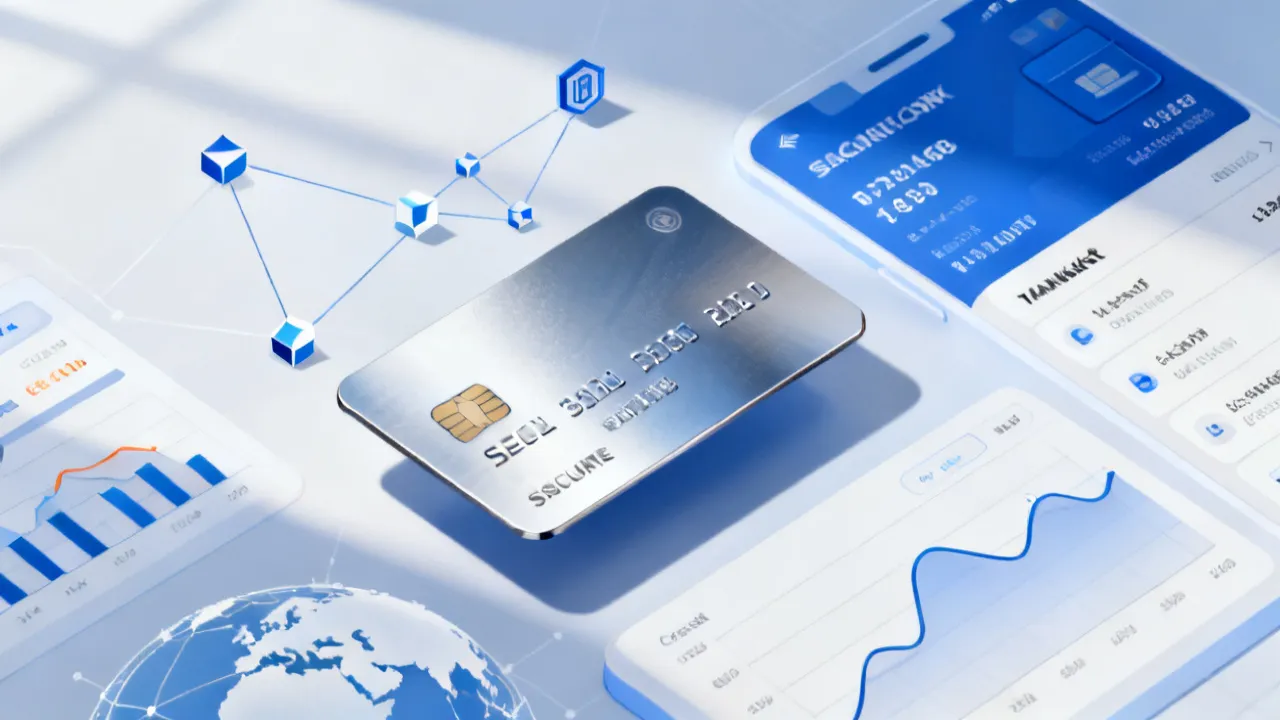
Worldline Issuing refers to the issuing-related services and technology capabilities associated with Worldline’s payments business. At a practical level, these capabilities help banks, financial institutions, fintech companies, retailers, and other eligible organizations create and operate payment-card programmes. The work may include product configuration, account and card lifecycle management, transaction authorization, fraud monitoring, digital-wallet enablement, reporting, and connections to payment networks.
The very important point for decision-makers is that issuing is not simply the production of a plastic card. It is a regulated and technology-intensive operating model. An issuer must establish customer accounts, apply product rules, authorize transactions, manage disputes, protect sensitive payment data, support cardholders, and reconcile financial records. A provider such as Worldline may supply much of the underlying processing infrastructure, but the precise division of responsibilities depends on the contract, regulatory model, market, card scheme, and type of programme.
Organizations assessing Worldline Issuing should therefore begin with business requirements rather than a feature checklist. A successful programme needs a clear target customer, a defined value proposition, an appropriate funding model, realistic authorization rules, carefully controlled risk parameters, and a support model that can operate continuously. Technology selection is important, but governance and operational readiness are equally significant.
In the payments industry, “issuing” describes the side of the ecosystem responsible for providing payment credentials to a cardholder or account holder. The issuer maintains the relationship with the customer, manages the payment account, and ultimately takes responsibility for transactions subject to the relevant legal and scheme arrangements.
Issuing processing is the technology and operational layer that enables these responsibilities. It commonly connects several functions that must work together without creating contradictory records. For example, when a cardholder makes a purchase, the system may need to identify the account, check status and available funds, apply authorization rules, evaluate fraud indicators, respond to the authorization request, record the transaction, and later support clearing and settlement. If the purchase is reversed, refunded, disputed, or partially completed, the same system must preserve an accurate account history.
Worldline Issuing can be evaluated in this context as an enterprise payments capability rather than as a single card product. It may support different programme structures, but organizations should not assume that every function is available in every country or under every commercial arrangement. Regional network participation, data-residency rules, licensing requirements, language support, and local operating practices can all affect the final solution.
| Function | Purpose | Questions for evaluation |
|---|---|---|
| Account management | Maintains customer, account, balance, status, and product records. | Can the model support the required account hierarchy, currencies, limits, and lifecycle states? |
| Card lifecycle management | Handles creation, activation, suspension, replacement, renewal, and closure. | Which card types, token states, and replacement workflows are supported? |
| Authorization | Determines whether a transaction should be approved, declined, or referred. | How are balances, limits, risk signals, merchant data, and real-time rules combined? |
| Clearing and settlement | Processes finalized transaction records and supports financial reconciliation. | What files, reports, accounting entries, and settlement calendars are available? |
| Fraud controls | Identifies suspicious behavior and applies preventative or investigative measures. | Can rules be adjusted by product, geography, merchant category, channel, and customer segment? |
| Disputes and chargebacks | Supports investigation and resolution of transaction complaints. | How are deadlines, evidence, representment, and customer communication managed? |
| Digital payments | Connects eligible card products with mobile wallets and digital channels. | What tokenization, provisioning, authentication, and lifecycle controls are available? |
| Reporting | Provides operational, financial, compliance, and programme performance information. | Are reports timely, exportable, auditable, and suitable for internal reconciliation? |
The potential customer base for issuing infrastructure is broad, although eligibility and service scope must be assessed individually. Traditional banks may use issuing technology to modernize legacy card platforms or expand into new card propositions. Fintech companies may seek a processing partner that can reduce the amount of infrastructure they must build internally. Retailers and loyalty organizations may explore payment products that complement an established customer relationship. Corporates may consider virtual cards for controlled business expenditure, subject to the relevant programme and regulatory arrangements.
A bank may evaluate Worldline Issuing during a platform replacement, a market expansion, a product modernization project, or a merger-related technology consolidation. The central issue is often coexistence. A new issuing platform may need to exchange data with an existing core-banking system, customer-information file, general ledger, fraud engine, digital channel, and contact center.
For a bank, migration planning deserves particular attention. Existing cards may have recurring payments, merchant-initiated transactions, wallet tokens, installment arrangements, supplementary cardholders, and historical dispute records. A migration that transfers only basic card numbers and balances may not preserve the full customer experience. The institution should define what happens to recurring credentials, token references, alerts, card controls, statements, and customer-service history.
Large financial institutions should also consider organizational governance. A card platform replacement may involve multiple legal entities, brands, currencies, and business units. Each may have different product owners, risk policies, service-level requirements, and reporting obligations. A successful implementation must establish a common operating framework while still allowing approved local variation.
Fintech organizations typically value speed, configurable products, clear APIs, strong documentation, and access to established payment infrastructure. However, a fintech cannot treat an issuing processor as a substitute for compliance design. Responsibilities for customer identification, sanctions screening, transaction monitoring, complaints, safeguarding, disclosures, and regulatory reporting must be documented before launch.
A fintech should also distinguish between a demonstration environment and a production-ready programme. A prototype may authorize a purchase successfully, but production operations must handle partial approvals, reversals, delayed presentment, offline transactions, duplicate messages, timeouts, refunds, disputes, card-not-present risks, and account closure. These less visible scenarios often determine whether a programme remains stable at scale.
Fintechs should pay particular attention to dependency management. If a programme depends on an issuing processor, a licensed sponsor, a banking partner, a card network, a card manufacturer, a wallet provider, and a separate fraud vendor, the fintech needs a clear incident-management model. A customer may see only one brand, even though a payment failure could originate in any part of the chain.
A retailer may be interested in a branded payment product, a loyalty-linked card, or a controlled spending account. The commercial objective might be customer engagement, payment convenience, expense management, or a broader financial-services proposition. The organization must nevertheless examine the costs and responsibilities associated with regulated payments, customer support, fraud, data protection, and complaints.
Commercial card programmes have their own requirements. A corporate customer may need multiple employees, spending limits by department, supplier restrictions, virtual credentials, approval workflows, enhanced transaction data, and accounting exports. Worldline Issuing should be assessed against these specific operational needs rather than against consumer-card assumptions.
Retailers should also consider whether the payment product strengthens the core customer relationship or creates a disconnected service. A branded card that cannot be managed easily through the retailer’s existing application may create confusion. The programme should define how loyalty points, refunds, promotional offers, customer identity, and payment records interact without compromising privacy or accounting accuracy.
An issuing programme usually begins with a product definition. This definition establishes the type of account, funding method, currency, card network, customer segment, fee model, limits, authorization behavior, and service channels. Product rules should be written in a manner that business, compliance, technology, and operations teams can all interpret consistently.
After onboarding, an eligible customer may receive a physical card, a virtual card, or both. The card is linked to an account and is assigned a lifecycle status. The customer may activate the card, set a personal identification number, add it to a digital wallet, adjust permitted usage through an application, or request a replacement. Each action creates events that must be recorded and made available to the relevant systems.
During a purchase, an authorization request travels through the payment ecosystem. The issuing environment receives transaction information and assesses the account’s status, available funds or credit, product rules, merchant context, card status, and risk indicators. It then returns an approval or decline response within the timing requirements of the transaction environment. An approval does not necessarily mean that the transaction has fully settled. Later clearing messages can differ from the original authorization, which is why reconciliation and exception handling are essential.
Once the transaction is finalized, the account record must reflect the correct financial effect. The programme may also need to calculate fees, update spending limits, deliver notifications, produce statements, and send data to accounting or reporting systems. If the customer challenges the transaction, the dispute process must connect the original authorization, clearing record, supporting evidence, and case history.
The principal benefit of a specialized issuing platform is concentration of expertise. Payment processing requires knowledge of card-scheme rules, authorization timing, security controls, reconciliation, dispute procedures, and operational resilience. A specialist provider can offer established processes and connections that would require substantial internal investment to create and maintain.
Another benefit is the possibility of a more consistent operating foundation. Instead of building separate systems for physical cards, virtual cards, digital wallets, transaction monitoring, reporting, and lifecycle events, an organization may seek an integrated approach. The value of integration should be tested, however. A solution can appear broad in marketing material while still requiring separate tools or manual procedures for important functions.
Configurability can also support product differentiation. A programme may define limits, merchant-category rules, geographic restrictions, card statuses, notification events, and customer permissions according to its market proposition. Excessive configuration, on the other hand, can create operational complexity. Every new rule requires testing, documentation, monitoring, and ownership.
The limitations are equally important. A processor does not automatically provide a banking license, a customer base, a complete compliance framework, or a successful distribution strategy. Integration work can be significant, especially where legacy systems and multiple data formats are involved. Commercial terms may include several components that are difficult to compare unless the buyer models expected transaction volumes and service requirements in detail. Availability of a feature can also depend on geography, scheme, product type, and implementation design.
There is also a strategic question about control. Outsourcing processing can accelerate delivery, but it may reduce the client’s direct control over release schedules, technical priorities, data models, and incident responses. A buyer should determine which capabilities must remain internally controlled and which can safely be delegated. This is especially relevant for organizations whose competitive advantage depends on rapid product experimentation or highly customized customer experiences.
Payment issuing is a high-trust activity. The programme handles payment credentials, personal information, transaction histories, authentication data, and financial records. Security must therefore be designed as a control environment rather than added as a final technical layer.
Organizations should review how sensitive authentication and card data are stored, transmitted, accessed, logged, and deleted. They should also understand the responsibilities associated with the Payment Card Industry Data Security Standard and any applicable card-scheme security requirements. Scope reduction may be possible through tokenization and carefully designed architecture, but scope reduction does not eliminate the need for governance or supplier oversight.
Access management deserves specific attention. Administrative access should be limited according to job role, protected with strong authentication, reviewed regularly, and recorded in an audit trail. Privileged activities such as changing authorization rules, unblocking cards, adjusting balances, or exporting sensitive data should require appropriate approvals and monitoring.
Depending on the jurisdiction and programme structure, controls may include customer due diligence, sanctions screening, transaction monitoring, suspicious-activity escalation, customer authentication, strong authorization practices, and record retention. The responsible entity for each control must be named. Ambiguous ownership can create gaps between a platform provider, licensed issuer, programme manager, and distributor.
The programme should document how customer information is collected, verified, updated, and retained. It should also define what happens when customer information changes, an account becomes inactive, a customer fails a review, or a relationship is terminated. These lifecycle decisions affect card status, available funds, recurring payments, wallet tokens, refunds, and customer communications.
Fraud controls should balance customer protection with approval quality. A rule that blocks too many legitimate transactions can produce unnecessary declines and customer dissatisfaction. A rule that is too permissive can expose the programme to financial loss and reputational damage. Effective governance usually combines real-time controls, case investigation, customer notifications, post-transaction analysis, and regular rule review.
Fraud strategy should also recognize different channels. Card-present transactions, online purchases, recurring payments, digital wallets, mail-order activity, and corporate virtual cards produce different risk signals. A single threshold applied to every channel is unlikely to reflect actual behavior. Worldline Issuing should therefore be assessed on the transparency and controllability of its risk-management model, not simply on whether a fraud feature is listed.
Fraud teams should measure more than gross loss. Useful metrics may include false-positive rates, customer-confirmed fraud, time to detection, time to block, recovery rates, dispute outcomes, approval rates, and repeat-incident frequency. These measures help senior leaders understand whether controls are protecting the programme while preserving a satisfactory customer experience.
Issuing systems are important operational services. A failure may prevent customers from paying, checking balances, receiving credentials, or resolving a fraud alert. During due diligence, the buyer should request information about service monitoring, incident classification, recovery objectives, backup arrangements, planned maintenance, communication procedures, and testing practices. The buyer should also understand which dependencies sit outside the processor’s direct control, including card networks, telecommunications providers, cloud services, identity systems, and banking partners.
Resilience planning should cover degraded operation as well as complete outage. An organization may need procedures for delayed notifications, restricted authorization, manual customer verification, emergency card blocking, settlement interruptions, and backlog processing after recovery. These procedures should be exercised periodically rather than left as documents that have never been tested.
A Worldline Issuing implementation may involve more than a single connection. The architecture could include a core-banking platform, customer-information system, mobile application, online banking channel, identity-verification service, fraud platform, customer-support tool, accounting ledger, data warehouse, card bureau, digital-wallet service, and payment-network interfaces.
The first technical task should be a domain map. Teams need to identify which system owns each important data object. For example, the issuing platform may own card status and authorization records, while the core system owns customer balances or the general ledger. If two systems appear to own the same field, reconciliation problems may follow.
APIs are often used for real-time actions such as card creation, status changes, balance inquiries, transaction controls, and customer notifications. Batch files may remain important for settlement, statements, accounting, regulatory reporting, or legacy integration. A modern programme may require both approaches.
Technical due diligence should examine authentication, authorization, rate limits, idempotency, versioning, error codes, retry behavior, event delivery, webhook security, and audit records. Documentation should explain not only the successful path but also failure scenarios. For example, if a card-creation request times out, the client must be able to determine whether the card was created before safely retrying the request.
Event-driven integration can improve responsiveness, but it introduces its own responsibilities. Events may arrive out of order, be delivered more than once, or be temporarily unavailable. The receiving system should use durable identifiers, support idempotent processing, and maintain a mechanism for replay or reconciliation. These technical requirements are particularly important for customer notifications and accounting updates.
Reliable issuing operations depend on consistent identifiers. Customer IDs, account IDs, card IDs, token references, authorization IDs, clearing references, dispute case numbers, and accounting entries should be mapped carefully. A transaction that cannot be traced from authorization through settlement creates unnecessary operational risk.
Reconciliation should be designed before launch. It should compare expected and received transaction records, identify missing or duplicated items, show timing differences, and produce actionable exception reports. Manual spreadsheets may assist during early testing, but they are not a durable substitute for controlled reconciliation processes in a mature programme.
Data quality should be monitored continuously. Common problems include inconsistent merchant names, incorrect currency codes, missing transaction references, duplicate customer records, stale card statuses, and mismatched time zones. A data-quality framework should define validation rules, exception ownership, correction procedures, and reporting to programme leadership.
Physical cards remain relevant for many payment contexts, but they introduce manufacturing, personalization, delivery, stock, replacement, and environmental considerations. The programme must define how cards are ordered, where they are produced, how delivery is tracked, and what happens when a card is undeliverable or compromised.
Card fulfilment is closely connected to customer onboarding. The organization should determine whether a card is produced immediately, after an eligibility decision, or only after a customer completes an activation step. It should also define how address changes, returned mail, suspicious delivery patterns, damaged cards, and urgent replacements are handled.
Virtual cards can support online payments, controlled expenditure, employee purchasing, travel arrangements, and account-based propositions. Their value often lies in speed and control, but the programme must still address issuance limits, expiry, merchant acceptance, recurring payments, user permissions, and fraud monitoring.
For commercial programmes, virtual-card controls may include single-use credentials, supplier-specific restrictions, amount ceilings, validity periods, approval hierarchies, and automated closure after payment. The operational model should explain how exceptions are handled when a supplier changes the final amount or a transaction is submitted after the credential’s expected validity period.
Digital-wallet support adds another lifecycle. A tokenized credential may have its own provisioning status, device relationship, suspension process, and replacement behavior. When a physical card is blocked, the programme must define whether associated wallet tokens are also suspended. When a card is replaced, the customer experience may depend on whether tokens can be updated or must be provisioned again.
These details are not minor implementation matters. They directly affect customer confidence. A person who reports a lost card expects rapid protection across physical and digital channels. A corporate administrator expects a virtual credential to follow the organization’s approval rules. A programme should test both expectations before public launch.
Payment products are judged during moments of urgency: a declined purchase, a suspected fraudulent transaction, a missing card, a delayed refund, or an unfamiliar merchant description. Worldline Issuing may provide underlying processing, but the programme owner remains responsible for creating a clear and humane customer journey.
Customer communications should explain what happened without revealing sensitive security information. A decline message should be useful but not disclose internal fraud logic. A fraud alert should provide a trusted route for confirmation. A replacement request should explain delivery expectations and the effect on digital wallets, recurring payments, and previously authorized transactions.
Service teams need access to enough information to investigate a problem. At minimum, they may require customer identity, account status, card status, transaction time, amount, merchant details, authorization result, relevant references, and dispute status. Access should be role-based and auditable. Giving every agent unrestricted access can create privacy and security concerns.
Support performance should be measured using both operational and customer-focused indicators. Important measures may include first-contact resolution, average handling time, complaint recurrence, fraud-alert response time, replacement delivery performance, dispute aging, and customer satisfaction. A processor’s system availability is important, but customers experience the complete service, including the actions taken by the client’s support teams.
A disciplined implementation reduces the risk of launching a technically functional but operationally incomplete product. The following sequence is suitable as a planning framework, although the actual workstream will depend on the selected service model.
Document the customer segment, use cases, geographic markets, funding model, distribution channels, product type, pricing approach, and expected transaction behavior. State what the card or account is intended to accomplish. A vague proposition often leads to excessive configuration and unclear compliance decisions.
At this stage, define the measures of success. These may include activated cards, active accounts, transaction approval rates, customer acquisition cost, revenue per account, fraud loss, support demand, retention, or commercial-card spend under management. Clear measures help prevent the programme from becoming a technology project without an agreed business outcome.
Identify the licensed issuer and other regulated entities. Clarify responsibility for customer onboarding, safeguarding, complaints, reporting, financial crime controls, data protection, and card-scheme obligations. Obtain legal and compliance advice relevant to each target market rather than assuming that an arrangement suitable in one jurisdiction will apply elsewhere.
Define account states, card states, transaction limits, currencies, permitted channels, merchant restrictions, authentication requirements, notification events, refund behavior, dispute handling, and closure procedures. Each rule should have an owner and a test case.
Rules should also be classified by change sensitivity. Some requirements may be fixed by law or scheme rules, while others may be business policies that can change through product governance. This distinction affects approvals, testing, release timing, and emergency procedures.
Map systems, interfaces, data ownership, security boundaries, operational dependencies, and reporting flows. Decide which functions are delivered by Worldline, which are supplied by other vendors, and which are built internally. Include nonfunctional requirements such as performance, availability, auditability, recovery, and data retention.
Request a detailed statement of work and service description. Review implementation assumptions, dependencies, support coverage, service levels, change procedures, subcontracting, data processing, exit assistance, and incident obligations. Pricing should be examined alongside the service boundary because an apparently low unit rate can be offset by integration, support, scheme, physical-card, or reporting costs.
Develop interfaces using test credentials and controlled data. Test successful transactions as well as declines, timeouts, duplicate messages, reversals, refunds, partial amounts, expired cards, blocked cards, insufficient funds, wallet events, and account closure. Test reporting and reconciliation at the same time; postponing them creates avoidable launch risk.
Testing should include volume and performance conditions. A programme may operate correctly with a few hundred transactions but behave differently during a promotional campaign, payroll cycle, holiday period, or incident-related surge. Capacity testing should cover authorization traffic, batch processing, reporting, customer-service inquiries, and alert delivery.
Perform security testing, access reviews, logging checks, data-flow assessments, vulnerability management, operational-resilience exercises, and compliance sign-off. Confirm that controls work in production-like conditions, including during an incident or degraded service state.
A pilot can expose unexpected customer behavior, operational bottlenecks, unclear communications, and data-quality issues. The pilot should have defined entry criteria, transaction limits, monitoring dashboards, support escalation, and exit criteria. It should be large enough to exercise realistic workflows but controlled enough to contain risk.
Finalize procedures for onboarding, card delivery, activation, fraud alerts, replacements, disputes, refunds, complaints, reconciliation, reporting, incidents, and regulatory inquiries. Train customer-service and operations teams. Ensure that staff can distinguish between a processor issue, a scheme issue, a merchant issue, and a customer-account issue.
After launch, monitor approval rates, decline reasons, fraud alerts, dispute volumes, card delivery performance, reconciliation exceptions, service incidents, customer complaints, and support resolution times. Product rules should be reviewed through a controlled change process. Continuous improvement is safer when changes are measured, tested, approved, and reversible.
No universal Worldline Issuing price should be assumed. Costs depend on programme scope, country, transaction profile, cards issued, physical production, digital services, integration complexity, support requirements, scheme arrangements, compliance obligations, and negotiated terms. Public descriptions of a service should not be treated as a quotation.
A buyer should request a pricing model that separates one-time, recurring, and usage-based charges. One-time charges may include discovery, implementation, migration, configuration, certification, and testing. Recurring charges may include platform access, account maintenance, reporting, support, security services, or minimum commitments. Usage-based elements may relate to authorization messages, settled transactions, cards, replacements, wallet events, cash access, disputes, or other services.
| Commercial category | Typical cost question | Why it matters |
|---|---|---|
| Implementation | What configuration, integration, certification, and migration work is included? | Unclear scope can create budget pressure before launch. |
| Platform services | Are charges based on accounts, cards, transactions, or a minimum commitment? | The very suitable model depends on customer growth and usage patterns. |
| Physical products | How are manufacturing, personalization, delivery, replacement, and urgent orders charged? | Physical-card expenses can vary substantially by distribution model. |
| Digital services | Are virtual cards, wallet provisioning, token lifecycle events, and APIs priced separately? | Digital features may involve distinct technical and commercial components. |
| Support | What service hours, incident coverage, languages, and escalation tiers are included? | Support requirements increase when the programme serves consumers continuously. |
| Disputes and fraud | Which investigative, representment, monitoring, and case-management activities incur fees? | Unexpected operational charges can affect the economics of the programme. |
| Change requests | How are new products, rule changes, reports, markets, and interfaces priced? | A flexible roadmap requires predictable change governance. |
| Exit and migration | What data, support, and assistance are available when the agreement ends? | Exit planning is part of responsible technology procurement. |
Financial modeling should use multiple scenarios rather than a single volume estimate. A conservative model may include slower customer acquisition, higher replacement activity, elevated support demand, and a greater proportion of disputed transactions. The model should also distinguish revenue from interchange or customer fees from costs controlled by the programme operator. This approach gives decision-makers a clearer view of sustainability.
Buyers should ask whether prices are subject to indexation, minimum volumes, annual commitments, foreign-exchange adjustments, tax treatment, or pass-through costs. They should also clarify whether charges apply when an account is dormant, a card is inactive, a transaction is reversed, or a customer requests a replacement. These details may materially affect unit economics.
A fair comparison requires a common requirements document. One provider may offer a broad processing platform, another may focus on APIs, and a third may provide a more complete programme-management service. Comparing headline feature counts can therefore be misleading.
Use a weighted evaluation matrix that reflects business priorities. For a regulated bank, resilience, migration capability, scheme expertise, and reporting may carry greater weight. For a fintech, API quality, launch support, product configurability, and international expansion may be more important. For a corporate programme, controls, approval workflows, data enrichment, and accounting integration may dominate.
| Evaluation area | Evidence to request | Assessment principle |
|---|---|---|
| Functional fit | Demonstrations, process maps, product documentation, and test results. | Confirm that the service supports actual workflows, not just stated features. |
| Regional suitability | Market coverage, local operating model, language capabilities, and regulatory responsibilities. | Validate every target market separately. |
| Integration | API specifications, file formats, sandbox access, error handling, and event models. | Evaluate the complete development and support burden. |
| Risk and security | Independent assurance reports, certifications, security policies, and incident procedures. | Evidence is more valuable than general statements. |
| Operations | Support model, service levels, reconciliation processes, and escalation arrangements. | Determine whether the operating model matches customer expectations. |
| Commercial terms | Detailed price schedule, minimums, indexation, change fees, and exit terms. | Model total cost over the intended contract period. |
| Strategic fit | Roadmap discussions, governance model, references, and implementation approach. | Consider whether the relationship can support future products. |
Reference checks can add value when they are structured. Prospective customers should ask references about implementation delays, quality of documentation, responsiveness during incidents, flexibility of change requests, accuracy of invoices, settlement support, and the ease of obtaining operational data. A reference should be compared with the buyer’s own scale, geography, product complexity, and regulatory environment.
The client may remain responsible for customer communications, product governance, financial crime procedures, complaints, and regulatory reporting even when processing is outsourced. The contract should state responsibilities in operational language, including who acts, who approves, who supplies data, and who communicates with the customer.
A payment programme is defined by its exceptions. Declines, reversals, duplicates, refunds, disputes, timeouts, fraud blocks, and delayed clearing should receive as much attention as successful approvals. Scenario-based testing should include both system behavior and customer-service procedures.
Authorization records and settled transactions are not always identical. Without a strong reconciliation process, financial discrepancies may remain hidden. The implementation should define ownership of exceptions, investigation deadlines, adjustment authority, and evidence retention.
Card migration involves more than transferring account numbers. Recurring payment arrangements, wallet tokens, card controls, customer credentials, statements, disputes, and historical data may all require treatment. A migration plan should include customer communication and contingency procedures.
Customization can support a differentiated product, but excessive variation increases testing and support costs. Start with a clear product architecture and introduce exceptions only where they create measurable customer or business value.
Even a successful relationship may eventually change because of a merger, regulatory decision, strategic shift, or technology modernization. Data portability, transition support, record retention, credential replacement, and customer communication should be addressed at the beginning of the relationship.
Reports are often designed late because the programme team initially focuses on card creation and transaction authorization. That approach can leave finance, compliance, operations, and customer-service teams without the information they need. Reporting requirements should be defined alongside product and interface requirements, with sample outputs reviewed before implementation is complete.
Launching an issuing programme is the beginning of operational management rather than the end of implementation. Early performance data should be reviewed frequently because actual customer behavior may differ from assumptions used during design. The programme may discover that customers prefer virtual cards, that certain merchant categories generate unusual declines, or that support demand is concentrated around a specific part of the activation journey.
A balanced dashboard should include customer, financial, risk, operational, and technical measures. Customer measures may include active-account rates, activation completion, retention, complaints, and satisfaction. Financial measures may include transaction volume, revenue, fee income, settlement exceptions, and cost per active account. Risk measures may include fraud loss, dispute rates, suspicious activity, and false positives. Operational measures may include authorization availability, card-delivery performance, incident resolution, and reconciliation aging.
Governance forums should review trends rather than only individual incidents. A small rise in decline rates may indicate a rule change, a merchant-data issue, a network problem, or an integration defect. A rise in customer complaints about refunds may point to a mismatch between clearing data and the customer-facing transaction history. Trend analysis can identify problems before they become material.
Change management should include impact assessment, testing, approvals, communication, implementation, and rollback. Changes to authorization rules can influence fraud, approval rates, customer experience, and revenue simultaneously. Even apparently minor changes to card status logic or notification timing may affect support volumes and regulatory disclosures.
From an industry perspective, the strongest issuing programmes are built around accountability rather than technology enthusiasm. A processing platform can reduce infrastructure complexity, but it cannot remove the need for disciplined product ownership. Senior leaders should ask three questions before approving a programme: Can the organization explain who is responsible for each regulated activity? Can it demonstrate how every important transaction will be reconciled? Can it support customers during the very difficult operational scenarios?
Worldline Issuing may be a suitable component in a broader payments strategy when its service scope, regional capabilities, integration model, and commercial structure align with those requirements. The decision should be based on documented evidence, controlled testing, and a realistic total-cost model. Brand recognition may support supplier confidence, but it should not replace due diligence.
The top procurement process usually includes representatives from product, technology, security, legal, compliance, finance, operations, customer service, and risk. Each group sees different failure modes. Product teams focus on customer value, technology teams on integration, compliance teams on responsibility, finance teams on settlement, and operations teams on exceptions. Bringing these perspectives together early reduces the chance that an apparently complete solution will contain unresolved gaps.
Experts also tend to distinguish platform capability from programme maturity. A processor may have strong technical functionality, yet the client may still lack the policies, staffing, data controls, and customer-service procedures required to use that functionality safely. Conversely, a well-governed organization may obtain considerable value from a platform that is implemented with a focused initial scope and expanded gradually.
Before a Worldline Issuing programme enters production, the following conditions should be addressed and formally approved:
Information about Worldline Issuing should be verified against current Worldline product documentation, contractual service descriptions, applicable card-network rules, and the regulations of the intended market. Worldline’s corporate materials can explain its payments and technology activities, but they should not be interpreted as a guarantee that every issuing capability is available to every customer.
Regulatory analysis should use official sources, such as the relevant national financial-services authority, the European Banking Authority where applicable, the European Central Bank for relevant payment-system context, and official data-protection authorities. Security requirements should be checked against the current documentation of the PCI Security Standards Council. Scheme-specific questions should be confirmed with the relevant network or an authorized programme partner.
Independent industry research can provide useful context, but market statistics should be checked for methodology, geography, time period, and definitions. A figure describing card transactions, payment accounts, or digital-wallet adoption may not measure issuing-processing performance. Buyers should avoid using broad market forecasts as a substitute for programme-level financial analysis.
Procurement teams should preserve the evidence used to make the decision. This may include product demonstrations, written answers to requirements, security questionnaires, architecture diagrams, service-level commitments, pricing assumptions, reference interviews, and legal reviews. Maintaining an evidence file helps prevent important assumptions from disappearing when project personnel change.
Worldline Issuing describes issuing-related payment services and processing capabilities associated with Worldline. These may support payment-card and account programmes, including functions such as card lifecycle management, authorization, transaction processing, reporting, fraud controls, and digital-payment connections. The precise scope depends on the market, product, legal structure, and agreement.
Not necessarily. A payments technology provider, processor, licensed issuer, programme manager, and distributor can have different roles. The relevant agreement and regulatory structure determine who holds the customer relationship, who issues the payment instrument, who safeguards funds or provides credit, and who performs regulated obligations.
Virtual-card support may be available within certain products or arrangements, but organizations should confirm current availability, eligible markets, card-network support, controls, provisioning methods, and pricing. A virtual card still requires lifecycle management, authorization rules, fraud protection, customer support, and appropriate compliance controls.
Digital-wallet enablement may form part of an issuing solution, subject to product and market conditions. Due diligence should cover token provisioning, authentication, token suspension, replacement behavior, device changes, and customer support. The client should test what happens to wallet credentials when the underlying card is blocked or replaced.
There is no reliable universal timeline. Duration depends on regulatory approvals, product complexity, existing systems, migration scope, card-network certification, security testing, data requirements, and the readiness of internal teams. A narrowly defined programme may move more quickly than a multi-market migration involving legacy accounts and several integrations.
Request a service description, responsibility matrix, technical documentation, implementation plan, security and resilience information, support model, reporting catalogue, pricing schedule, assumptions, change-control process, data-processing terms, subcontractor information, and exit provisions. Ask for demonstrations using realistic scenarios rather than only standard purchase flows.
No. It can provide tools and controls for fraud management, but risk remains a shared responsibility. Product design, customer onboarding, authentication, transaction rules, monitoring, investigation, customer education, and incident response all influence outcomes. Fraud controls should be governed and adjusted using reliable programme data.
The answer depends on the operating model, but common integrations include core banking, customer identity, mobile and web channels, fraud monitoring, customer service, accounting, reporting, card production, digital wallets, and payment-network interfaces. The critical issue is not the number of interfaces but whether data ownership, error handling, security, and reconciliation are clearly designed.
Build a total-cost model covering implementation, migration, platform services, transactions, accounts, physical cards, replacements, digital services, support, disputes, fraud operations, scheme expenses, reporting, change requests, and exit assistance. Apply multiple usage scenarios and document which assumptions are estimates, contractual commitments, or externally controlled costs.
It may be appropriate if the fintech’s regulatory model, target market, product scope, budget, integration capability, and support expectations align with the offering. A smaller organization should pay particular attention to minimum commitments, implementation dependencies, internal compliance capacity, incident coverage, and the level of operational support required after launch.
The programme should distinguish between insufficient funds, an inactive or blocked card, a risk decision, a technical failure, a merchant or network issue, and an authentication problem. Customer-facing messages should be clear without exposing sensitive controls. Internal teams need enough diagnostic information to investigate the event and identify recurring decline patterns.
Authorization confirms an immediate transaction decision, while clearing and settlement finalize financial records. Amounts, timing, references, reversals, and refunds may differ across these stages. Reconciliation connects them and identifies exceptions. Without it, the programme may have inaccurate balances, unresolved financial differences, or delayed customer corrections.
Map critical dependencies, establish resilience requirements, review business-continuity arrangements, maintain documented contingency procedures, and understand data portability. Supplier concentration is not automatically unacceptable, but it should be visible, governed, and considered in the organization’s operational-risk framework.
The card network provides rules, connectivity, operating standards, and processes for authorization, clearing, settlement, and disputes. Network participation can affect certification, product eligibility, geographic availability, fees, transaction data, and operational obligations. The client should confirm whether Worldline manages network relationships directly, supports the client’s existing arrangements, or requires another partner to perform particular responsibilities.
Yes, a staged approach can reduce risk. An organization might begin with one market, one currency, a limited customer segment, or virtual cards before adding physical cards, additional currencies, commercial controls, or international coverage. Each stage should have explicit entry and exit criteria so that complexity does not expand faster than the organization’s operational capacity.
Issuing concerns the customer or account side of a payment, including cards, balances, authorization decisions, and cardholder support. Acquiring concerns the merchant side, including merchant onboarding, payment acceptance, settlement to merchants, and merchant risk. Some payment companies operate across both areas, but the systems, responsibilities, and commercial models are different.
Worldline Issuing should be understood as part of the infrastructure and operating model behind payment-card and account programmes. Its relevance lies in the ability to support complex issuing activities, but the value of the solution depends on fit: fit with the regulatory structure, target market, product design, technology architecture, customer-service model, risk controls, and commercial plan.
Organizations should approach evaluation through evidence and practical scenarios. Confirm the service boundary, test difficult transaction paths, assign ownership for every control, model the full cost, and plan for resilience and exit. With that discipline, Worldline Issuing can be assessed on meaningful criteria and positioned appropriately within a modern payments strategy.
Striking the Perfect Balance: Navigating Premiums and Out-of-Pocket Expenses in Senior Insurance Plans

Explore the Tranquil Bliss of Idyllic Rural Retreats

How to Make Lasting Memories at Disneyland Attractions

Affordable Phones and Plans for Seniors

Affordable Full Mouth Dental Implants Near You

Unlock the Top Kept Secrets to Finding Your Ideal Dentist for Flawless Dental Implant Results!

Discovering Springdale Estates

Unveiling RS Sul Telecom Services

The Guide to Car Trading


Maximizing Benefits with Cash Rewards Cards
This comprehensive guide explores the nuances of using Cash Rewards Cards to maximize financial benefits. With a focus on how consumers can harness these cards for cost-efficiency, the article provides an in-depth examination of their functionality, various reward structures, and strategies to optimize their use. Featuring professional insights, the piece serves as a detailed resource for anyone looking to enhance their purchasing power through strategic card usage.

The Comprehensive Guide to Cash Rewards Card
Discover how a Cash Rewards Card can transform your spending habits and financial health. These cards offer users points for money spent, which can be redeemed for cash. Utilizing a rewards card effectively can bring significant benefits, but understanding the terms, fees, and management practices is essential for maximizing rewards and avoiding debt.

Understanding Calcard Sinop for Industrial Supply Decisions
This guide explains how Calcard Sinop fits into industrial procurement decisions, focusing on how buyers compare supplier options, specification compatibility, and delivery reliability. The background sections objectively define what the term typically refers to in supply contexts and why sourcing discipline matters. Readers also get practical criteria for evaluating offers and a detailed FAQ for smoother, risk-aware purchasing.

Calcard Sinop: Industry Overview and Sourcing Guide
Calcard Sinop products are evaluated here as a practical sourcing and compliance guide. The article objectively explains what “Calcard Sinop” commonly refers to in commerce and supply contexts, outlines selection criteria, discusses supplier considerations and procurement conditions, and provides a comparison table, step-by-step checklist, and FAQs to help buyers make defensible decisions.

Calcard Sinop: Buying Guidance and Industry Context
Calcard Sinop products are evaluated here for informed selection, focusing on usage suitability, documentation, and supplier credibility. Then the guide offers an objective background on what “Calcard Sinop” typically refers to in medical supply and product ecosystems, clarifying how professionals compare specifications, compatibility, and traceability across sourcing options.

Calcard Sinop: Expert Guide to Choosing Carefully
This guide helps you evaluate Calcard Sinop options with an objective, expert lens—covering what Calcard Sinop typically implies, how to compare offerings, and what questions to ask before committing. It then explains the practical decision criteria used in the dental/medical supply ecosystem, focusing on quality, documentation, traceability, and supplier accountability.
